The Drugs That Closed an Era
Half a century of drug deaths on stage, reread through the records and the statistics behind them.
Almost none of them became a headline. Say the words drug death and what comes to mind first is a handful of names, people who once stood on a stage.
The year before, it was 105,007. The age-adjusted death rate fell by 26.2% in a single year.
It is still close to eighty thousand deaths a year. This piece rereads the few that left a name behind, through the records and the numbers: what kept repeating, and what those names hide.
Gather the deaths that left a name by drug, and the same combinations recur.
Each dot is one person: 290 people who died of an overdose from 1970 on and whose record names the drug. The seven circles are drug classes, and the branches reaching out from each are that class's drugs. The inner end of a branch is 1970; the outer end is 2026.
The largest circle is opioids. Of the 290, 175 have an opioid on the record: heroin, morphine, oxycodone, fentanyl.
94 people did not stay within one class. Anyone whose record names drugs from two classes or more sits not on a branch but inside the ring, between the circles they joined. The nearer the middle, the further apart the classes, or the more of them.
The commonest combination is opioids with stimulants. Of the 87 people with a stimulant on the record, 38 had an opioid too. The speedball, heroin and cocaine together, is the familiar case.
Barbiturates and sleeping pills were on 18 records in the 1970s. In the 2010s they were on 2. As prescribing changed, so did the drugs on this list.
Fentanyl first appears in 2003. Of the 26 people with fentanyl on the record, 15 died in the 2020s.
72 records name no drug at all, only "overdose" or "multiple drugs". They are left out of every class and kept apart, off the ring.
Now look for yourself. Click a circle, a branch or a dot and the camera goes there and opens the record. You can search for a name, or wind the years back.
| Drug class | People |
|---|---|
| Opioids | 175 |
| Stimulants | 87 |
| Alcohol | 60 |
| Benzodiazepines | 35 |
| Barbiturates & sleeping pills | 30 |
| Other prescription drugs | 17 |
| Anaesthetics & dissociatives | 14 |
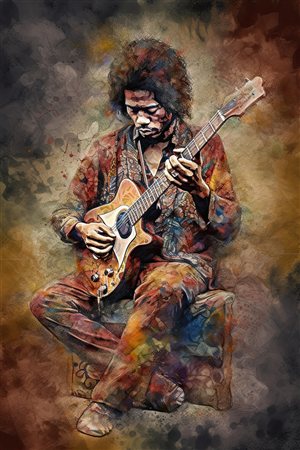 Image: AI-generated illustration (Pixabay, ElephantSoup, Pixabay Content License)
One took prescribed sleeping tablets, the other heroin. Both were drugs that suppress the central nervous system.
1970 — two deaths at 27
London, 18 September: Jimi Hendrix took eighteen times the prescribed dose of the sleeping tablet Vesparax and asphyxiated on his own vomit. The coroner’s inquest ruled out suicide but could not establish exactly what happened, and returned an open verdict.
Two and a half weeks later, on 4 October, Janis Joplin was found dead of a heroin overdose at the Landmark Motor Hotel in LA. The coroner recorded accidental death.
Rolling Stone (1970) · History.com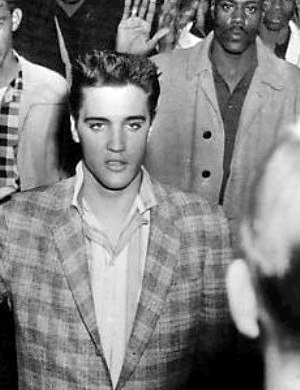 Photo: 1958 US Army swearing-in, AP (public domain, PD-US-no-notice)
What put him in danger was not an unknown supplier but a licensed doctor signing prescriptions in his name.
1977 — a death written on prescriptions
Graceland, Memphis, 16 August. The autopsy detected fourteen drugs, with a codeine concentration ten times the top of the normal range.
At a 1981 criminal trial it emerged that his personal physician, George Nichopoulos, had written more than 19,000 doses of prescriptions in the 31 months before the death. Nichopoulos was acquitted, but the Tennessee medical board permanently revoked his licence in 1995.
UPI Archives (1981)The person who gave the injection was not an unknown supplier, but someone who had spent that night with him.
1982 — two drugs in one injection
Chateau Marmont, LA, 5 March. A 21-page coroner’s report gave the cause as acute intoxication from a speedball — cocaine and heroin injected together.
The investigation reopened when Cathy Smith told the National Enquirer that she had administered the injection herself; in 1986 she pleaded guilty to manslaughter and served 15 months.
UPI Archives (1982)The cocaine and morphine concentrations were each lethal on their own, and the estimated intake was up to eight times a lethal dose. There were no needle marks — it had been swallowed.
1993 — the pavement outside a club
In the early hours of 31 October, twenty-three-year-old River Phoenix collapsed outside the Viper Room in LA. The autopsy recorded acute multiple drug intoxication — a speedball of cocaine and heroin.
CBS News LA (2013 retrospective)Nichopoulos was acquitted in 1977. Thirty-two years later Murray, standing in the same position, was convicted — what changed was the law’s attitude, not the position itself.
2009 — a surgical anaesthetic at home
25 June. The LA County coroner ruled the death a homicide, from acute propofol and lorazepam intoxication. His personal physician, Conrad Murray, had been administering the surgical anaesthetic propofol intravenously at the house to induce sleep.
Murray was convicted of involuntary manslaughter in 2011 and sentenced to four years, serving two.
NPR (2009)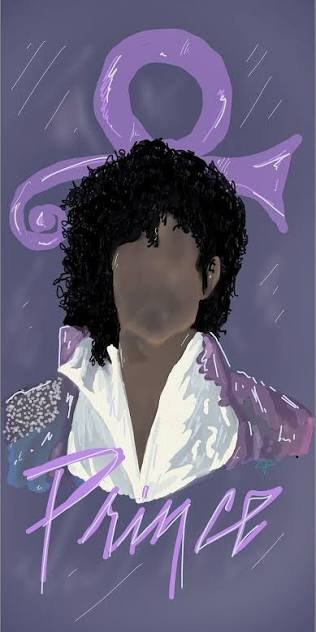
 Prince: fan art by the author · Mac Miller: Nicolas Völcker, Wikimedia Commons, CC BY-SA 4.0
He believed he was swallowing a drug he knew. But that drug no longer came from the supply chain he knew — this was the era in which the illicit pill market itself began to be contaminated.
2016–2018 — counterfeit pills
On 21 April 2016 Prince was found in the lift at his Paisley Park home. His blood fentanyl concentration was above the upper bound reported as lethal. He had swallowed what he believed to be Vicodin; in fact it was a counterfeit pill containing fentanyl. After two years of investigation, the source of the counterfeit was never identified.
On 7 September 2018 Mac Miller died at his LA home of "mixed drug toxicity", with fentanyl, cocaine and ethanol found together.
NPR · LA County MEWhat went into the bloodstream was not a back-alley drug but one out of a clinic refrigerator. The enabler’s position was not vacant this time either — this time someone with a medical licence was standing in it.
2023 — a black market in legal prescriptions
28 October, the pool at his LA home. The LA County coroner gave the cause as the acute effects of ketamine, with drowning, coronary artery disease and buprenorphine as contributing factors. Perry had been receiving ketamine infusion therapy for anxiety and depression.
A subsequent federal investigation charged five people, two of them doctors, with illegally distributing ketamine; all five pleaded guilty.
LA County ME · U.S. DOJWikipedia's list of deaths from drug overdose and intoxication is used as an index only; each case follows the source that list cites for its row. Just et al. (2016) built their sample from the same list. Deaths from 1970 on; suicides, deaths that were not overdoses (crashes, falls, poisonings and similar) and rows without a source are left out. Drugs follow the list's own entry, and where that entry says only "multiple", the notes column is read instead. As of 2026-09-14.
Of the 290 people on the map, 175 have an opioid on the record, and 94 took drugs from two or more classes together. Opioids with stimulants alone account for 38. The names of the drugs changed with every era; the combinations did not.
In numbers, the stage was the more dangerous place.
A study that collected celebrities’ drug-related deaths from public sources for 1970–2015 found 220 cases in which the substances involved were clearly identified.
The average age at death was 38.6, and 75% were men. Most died between 25 and 40.
Deaths rose in the twenty-first century, with a significant increase in cases involving prescription opioids. Where prescription opioids or heroin were involved, the average age at death was lower.
Two hundred and twenty is a count of cases, not a measure of risk. Risk needs something to compare against. A study that followed 1,489 rock and pop stars who became famous between 1956 and 2006 set them beside the general population of the same age, sex and ethnicity.
For North American stars, relative survival fell steadily, from 99.3% one year after fame to 87.6% forty years after. Of the 137 who had died by 2012, 25 died of a drug or alcohol overdose, and solo performers’ unadjusted mortality was about twice that of band members.
Widen the net and the picture holds. In the records of 13,195 popular musicians who died between 1950 and 2014, mortality averaged across all ages was twice the general population’s. The excess in violent deaths, overdoses among them, was largest under the age of 25.
So is the danger the profession of music, or the fact of being famous? In a study comparing 635 singers matched for gender, nationality, ethnicity, genre and solo or band status, famous singers had a 32% higher mortality risk than less famous ones.
Hold the conditions of the job constant, and fame still adds a risk of its own. This study counted every cause of death, though, not drugs alone.
But the stage is not where the overdose epidemic is centred. In 2024 the US overdose death rate was highest at ages 35 to 44, and the rate for men was more than twice that for women.
By occupation, construction was the group in which overdoses made up the largest share of deaths. While the names that fell on a stage are remembered, most of these deaths happen where no headline is written.
What did not change in fifty years was the body, and who stood beside it.
One person under the stage light and another at its edge. The navy figure is the one beside them — what has to read at a glance is that they stand where the warning signs can be seen.
No faces and no likeness of real people. No syringes or pills, and nothing that points at who was guilty — the four cases ended in different verdicts.
Lay the records side by side, and what repeats is not any particular drug.
What repeated across those fifty years was not the name of any particular drug, but the structure of putting several central-nervous-system depressants into a body at once. The FDA warns that combining opioid analgesics with other CNS depressants raises the risk of profound sedation, respiratory depression, coma and death.
In all four cases, the person closest to the danger was not an unknown dealer but someone entitled to be there legitimately.
Wealth and fame did not protect them. If anything they installed, right beside them and in a position to see the warning signs, someone with a reason not to look.
A celebrity’s drug death is remembered as one person and one drug. The headlines keep names like heroin, propofol, fentanyl and ketamine. Lay fifty years of records side by side, though, and what repeats is not the name of a drug. Several drugs that suppress the central nervous system went into one body together, and almost always someone was standing beside it.
That position beside them is the most particular thing Hollywood and the music industry created. Elvis Presley had a personal physician who wrote more than 19,000 doses of prescriptions in the 31 months before his death. Michael Jackson had a doctor who brought a surgical anaesthetic into the house. Matthew Perry had two doctors and others who illegally supplied him with ketamine. Money and fame shortened the road to the drug, and they put the people who should have refused a request in the position of granting it. Whoever stood there was closest to the warning signs, yet the reason they stood there at all was to say yes.
The numbers twist that impression once more. Being famous added a risk of its own on top of the risks of the profession, and North American stars’ survival drifted further from the general population’s with every year after fame. Yet most of the close to eighty thousand overdose deaths a year happen far from any stage: the death rate is highest in the late thirties and early forties, and by occupation it is construction. Celebrity deaths do not represent this epidemic. They are only its most visible edge.
That is why the way we read them matters. The researchers who followed 1,489 stars wrote that young people should understand stars’ substance use and risk-taking as possibly rooted in childhood adversity, not as symbols of success. Rather than putting the name of a drug in a headline, asking who handed it over, what it was mixed with, and why the person beside them did not stop, comes closer to preventing the next death.
The deaths on stage are remembered by a few names. The same structure is repeating today, without them.
References (20)
- Just et al., Drug-related celebrity deaths: a cross-sectional study, 2016
- Garnett MF, Miniño AM. Drug Overdose Deaths in the United States, 2023–2024. NCHS Data Brief No. 549. 2026.
- Bellis MA, et al. Dying to be famous: retrospective cohort study of rock and pop star mortality and its association with adverse childhood experiences. BMJ Open. 2012;2(6):e002089.
- Kenny DT, Asher A. Life Expectancy and Cause of Death in Popular Musicians: Is the Popular Musician Lifestyle the Road to Ruin? Med Probl Perform Art. 2016;31(1):37-44.
- Hepp J, Heine C, Schliebener M, Dufner M. The price of fame? Mortality risk among famous singers. J Epidemiol Community Health. 2026;80(4):231-236.
- Harduar Morano L, Steege AL, Luckhaupt SE. Occupational Patterns in Unintentional and Undetermined Drug-Involved and Opioid-Involved Overdose Deaths — United States, 2007–2012. MMWR. 2018;67(33):925-930.
- FDA, Opioid analgesics and benzodiazepines safety measures
- Rolling Stone, Hendrix Inquest Inconclusive (1970)
- History.com, Janis Joplin dies of a heroin overdose
- UPI Archives, Fourteen different drugs... (1981)
- Boston Globe, George Nichopoulos obituary
- UPI Archives, John Belushi... (1982)
- CBS News LA, River Phoenix remembered 20 years after his death
- NPR, Coroner Rules Michael Jackson Death A Homicide
- HISTORY, Conrad Murray receives four-year sentence
- NPR, Prince died with exceedingly high level of fentanyl
- Star Tribune, Carver County closes Prince death investigation
- LA County Medical Examiner, Cause and Manner of Death: Mac Miller
- LA County Medical Examiner, Cause and Manner of Death: Matthew Langford Perry
- U.S. DOJ (C.D. Cal.), Five Defendants Charged in Matthew Perry's Fatal Overdose